Your support rep is also trapped in this call, with Des Traynor of Intercom

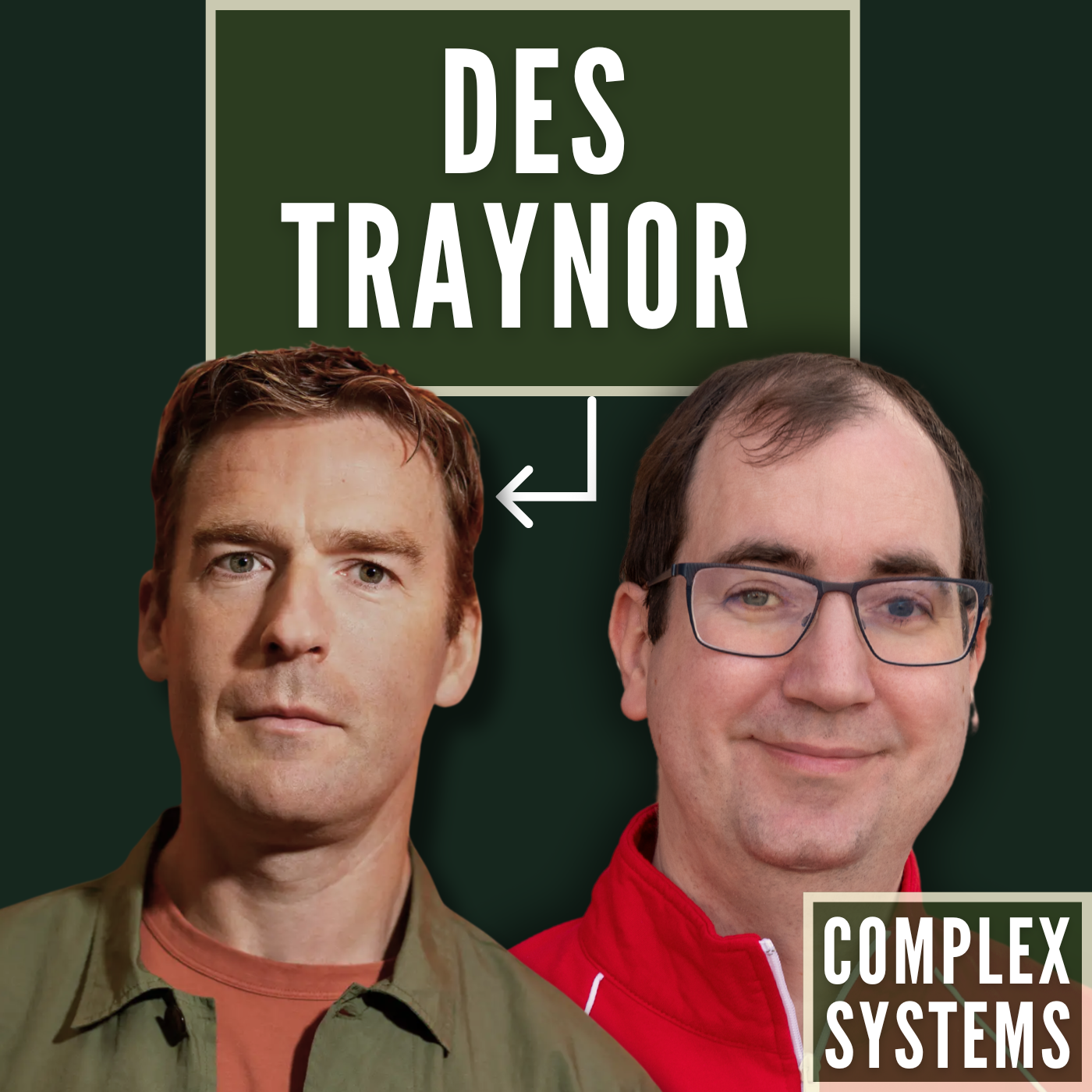
This week, Patrick McKenzie (patio11) sits down with Des Traynor, the co-founder of Intercom. They discuss how AI agents are democratizing white-glove service, why modern LLMs have retrained user expectations around “chatbots” very quickly, and the surprisingly liberating effect of talking to something that will never judge you for missing a loan payment.
Thanks to our sponsor: MongoDB
Tired of database limitations and architectures that break when you scale? MongoDB is the database built for developers, by developers: ACID compliant, Enterprise-ready, and fluent in AI. Start building faster at mongodb.com/build
Timestamps:
(00:00) Intro
(00:29) Intercom and its evolution
(00:51) Challenges in customer service systems
(02:54) Scaling customer support in startups
(04:53) Organizational inefficiencies and customer experience
(06:53) Metrics and their impact on customer support
(12:40) Human capital issues in customer support
(15:53) AI's role in customer support
(17:01) Future of customer support roles
(20:09) Sponsor: MongoDB
(20:53) Future of customer support roles (continued)
(26:19) AI and customer interaction
(26:55) The myth of artisanal customer support
(27:45) Fin Guidance: Evolution and user behavior
(29:10) Fin's impact on customer support efficiency
(33:30) Expanding Fin's capabilities beyond support
(42:50) AI in government and other sectors
(49:20) The future of AI connectivity and integration
Transcript
Welcome to Complex Systems, where we discuss the technical, organizational and human factors underpinning why the world works the way it does.
Patrick: Howdy, everybody. My name is Patrick McKenzie, better known as patio11 on the Internet. And I'm here with Des Traynor, who is the co-founder of Intercom.
Des: Hey, Patrick. How's it going?
Patrick: Doing pretty well. Thank you. How about yourself?
Des: Really well, thanks. Really well.
Intercom and its evolution
Patrick: So for the five people in the audience who don't know what Intercom is, can you give them a brief précis?
Des: Sure. I like the idea of expanding our addressable market with these five people. Intercom began life as a customer messaging tool. It's predominantly used as a customer service helpdesk. And then over the last few years, it's become an AI helpdesk combined with an AI agent called Fin that everyone knows the most.
Challenges in customer service systems
Patrick: So the thing that I would most love to talk about today is customer service considered as a system and customer communications broadly.
I think we at many companies throughout capitalism are a little bit guilty of shipping the org chart. The customer perceives they have a relationship with their bank or their software company or similar. But there is one VP I'm in charge of customer support and one VP I'm in charge of marketing and the two VPs never talk to each other. [Patrick notes: You’d be surprised how many consulting engagements are marriage counseling at much higher hourly rates.] And at the scale of a large enterprise, there's really 37 VPs. And we “ship the org charts” and so we have a blinkered conception of what happens.
A fun fact about my life: my first job was actually as a CS rep slash order entry representative at a company that sold pens and paper. And so I got to see from that side of the telephone why it is difficult to do this well at scale, and would love to communicate that to the audience. Maybe give some people some pointers on how to do it better at their companies, or how to be a more proactive consumer about it and talk about how AI is changing things.
Let's start with the industrial organization of customer support. You deal with customers who are across the spectrum from a company like the one I used to run with one person selling software from a bedroom all the way up to the largest companies in the world. And I feel there's probably some step changes in how customer support is run as an organization across that spectrum. But you've forgotten more than I will ever know. What does that look like?
Des: I mean, the step changes are interesting because they almost always serve one goal at the cost of another. Companies love to say it's all about the customer. But then when you look at how they actually design or track designer customer experience, experience journeys and flows, it's almost always taking business goals somewhat in isolation and prioritizing them over any sort of cohesive end user experience that they would like to profess to enjoy.
Scaling customer support in startups
Des: So when you're an early stage startup, typically it's founder-led support in the same way it's founder-led sales and founder-led everything, because it's usually founders plus plus or whatever the entire team is. The early days of support are usually honestly good because you're kind of moonlighting your engineering and product people to do a bit of support, and they're fixing bugs as quickly as often as they're replying to customers.
So they tend to see a problem, make it go away for everyone, go back to the next issue in a queue, and kind of blitz through it that way. Even your early support team can be pretty good, because it's usually like-minded people who really want to work in a startup who are still kind of missionaries to the startup in some sense.
They really believe in increasing the GDP of the Internet or making Internet business personal or whatever it is that they're kind of the good goal is.
It's once you start to scale the support org—and usually that necessarily has some model-breaking things in it. You have to give them hours to work on, set workloads and quotas and all of that sort of stuff. It's easy to say, oh, we don't really have to give them hours. The reality is, you kind of do. You have to say to people, your job stops at 5:00 PM. You have to go home, and at some point that becomes a reality. You cannot just rely on the sort of wide-eyed, altruistic missionaries of your startup. You actually have to have a scalable system that is robust to individual motivation.
So that's one area where it starts to get a little bit chopped up, which is just the raw scale of people. Once you start saying, hey, you have set working hours, and then perhaps later on you'll start to set individual efficiency quotas—estimating the average handling time or close time while you're operative or whatever—that starts to change the individual's incentive. That can be survived. I know that a lot of upscale companies have this but still manage to deliver a cohesive customer experience.
Organizational inefficiencies and customer experience
Des: I think the thing people really get wrong is what I would call the chopping up of the experience.
[Patrick notes: For a version of this specific to banks, see Seeing like a Bank, which rhymes with Des’ take here. Your princess is in another castle. No, your princess’ castle is in another castle.]
So we've all had this horrendous experience where if you've ever bought a car, you go in and the person who greets you when they're trying to sell you a car is all slick hair, shiny suit, shiny shoes, and "Welcome, Mr. McKenzie. Let me walk you around the dealership." Then you come back two weeks later because there's something wrong with the car, and the person who will talk to you—that's the difference, honestly, between the sales department and support. And you start to see incentives that work.
I think what generally happens is people tend to chop up the experience. So you used to go from, let's just say founder-led sales started at some point where it was one person remembering all of your context to some middle ground where maybe somebody closed the deal. But generally speaking, it was a pretty cohesive experience because the company was still pretty united.
Then you fast forward to the at-scale, fully efficiency-maximized, let's just say optimized customer experience and what you have there is the AE who talked you through signup, did the deal, they hand you over to the CSM, and then the support person when you have a question.
[Patrick notes: A Customer Success Manager is typically more junior in a sales org than an Account Executive, who are the main deal closers. The CSM handles some of the boring administrative work of onboarding the new customer and then is the salesperson for after-the-sale, for example, when the contract comes up for renewal a year later, or for running a quarterly check-in meeting to make sure that the software company is not blindsided by a customer suddenly deciding to not renew for a reason that would have been fixable 8 months ago.]
Des continues: And as the end user, this is where Conway's Law kicks in. This is where you really feel like you're popping into the org chart. You have a question that might look like, "Hey, I would like to use such and such a feature, but it's not working for me." That sounds like support until you realize that it's not on your plan and support hands you over to the CSM. CSM realizes this is actually a contract renewal, turns it over to the original AE, hands it back to the CSM. [Patrick notes: Perhaps with the explanation “I already got my commission here; do your job and maybe you get yours.” If you hire particularly mercenary AEs… and, well, there are many paths to being a successful AE and that is certainly a well-represented one in the industry.]
None of this is in service of brilliant customer experience, but it is the result of 6 or 7 different orgs all kind of optimizing and not really talking, like most orgs.
Sure, we have metrics like NPS, which are extremely vague things that everyone likes it when they go up, but when someone gives you a two on an NPS survey, no one knows what to do with it.
Metrics and their impact on customer support
Des: So the metrics aren't great. And because of that, we don't have a very crisp way of saying, how do we measure whether or not we're just doing right by our customers?
Obviously the long term measure of that is things like net revenue retention or anything like that—do they stick around for many, many years? And even at that, that doesn't mean you're good. They could just be stuck. There could be vendor lock-in or any other way to do it.
But I think that the natural tendency as you hire more and more seasoned senior professionals, what they'll want to do is build up their individual fiefdom, or if we are to be politer, we might just say their own org. They'll want to report up to their boss on their own org. They'll want to isolate those that they can directly affect as well. So that will mean ruling other things outside of their scope. So you end up with support leaders who will talk about handling time and ticket close rate and ticket recidivism and stuff like that. Salespeople talk about leads. CFOs might talk about utilization or whatever. But everyone's kind of chasing their own thing and it can at times appear kind of either bipolar or psychopathic to the end user who's actually receiving all of these various messages like "use more, no upgrade, no don't upgrade, fix your stuff."
[Patrick notes: Two particular emails I’ve received over the years from software companies stand out here. One was titled something like “Urgent: regarding the security of your $NAME account.” Of course I opened it. It was a sales rep trying to cross-sell one of their new products. I took a call with him and explained why an engineering minded person, like myself and many of their customers, might consider that headline cause to call the CEO’s personal cell phone and ask what the heck had happened at their company. I didn’t make the call and, in hindsight, probably should have, though who knows if the rot would have been stoppable at that point.]
Des continues: And none of it actually makes sense.
And that's ultimately I guess the desire for efficiency comes at the cost of user coherency. And I think that's the thing that people don't realize until it's too late. And it's very hard to claw back then because it involves dismantling rules of engagement that have been hard fought and won by previous leaders.
Patrick: I think we deal with Goodhart's Law in the most painful way possible.
Des: Sorry, oh yeah—that measure becomes the target, right?
Patrick: Right. So for the people listening that haven't heard of this, it's that you can measure statistics, and that is useful. But as soon as you make a measure into a goal, either individuals choosing to game the system, or the system's organic incentives causing gaming of itself, will cause the fidelity of that metric at tracking reality to decrease.
[Patrick notes: For a brilliant demonstration of the there-is-no-evil-actor-we-played-ourselves failure mode, see (past CS guest) Dan Davies’ Lying For Money, particularly the chapter on what he calls fraudogenic environments.]
Des: I was gonna say what we talked through is actually kind of useful because there's almost a mashup of Goodhart and Conway, right, that overlap. Which is orgs have goals. Those goals are usually set on targets. Those targets then no longer—those targets were once based on a measure, that measure is now inefficient.
So all of a sudden you end up with call centers where people are going to pick up and drop the phone rather than dealing with the customer support goal, because that will reduce the average handling time. Right. Even though it's these sorts of perverse incentives that can occur when you kind of let individual orgs use measures as targets.
Patrick: One of the classic ones for me, you mentioned net promoter scores. So we are institutionally, as capitalists, good at our jobs. We are institutionally aware that things like average hold time might not fully capture the customer experience, so we'll send you a survey afterwards. I was on an airline once, and I got passed a piece of glossy printed paper that had clearly been commercially manufactured, saying "You're going to receive a survey after you get off the airplane. And remember, five is the only acceptable score."
And so it isn't merely the fact that the organization is attempting to defeat the organization's surveillance of its own efforts. Someone signed a purchase order to do that.
Des: There's also the bizarreness of the question as well. I don't know if you're familiar with that great meme—it was a Windows 2000 dialog. It was like "Would you recommend..." and someone just wrote in the comment box "I need you to understand normal humans do not go around recommending operating systems to each other."
I think there's something valid about criticizing the ridiculousness of the question. A lot of things don't get regularly recommended. And yet that's entirely what NPS is based on.
Patrick: Yeah. I think there is a bit of cargo culting and a bit of that—the built affordances that we put into software create the culture of the organizations that use the software, and then that becomes industry best practice. And so you end up measuring whatever is easy to measure.
And so in web analytics, people spend a lot of time thinking about time on page. Not because that matters to anyone! The average obscures the difference between people who bounce immediately and people who spend an hour reading the article. But simply because Google Analytics puts it front and center, because next to hits, that's one of the few value adds that they can put on every web page on the Internet.
Des: Yeah. In unrelated news, did you notice that LinkedIn have recently released games inside LinkedIn? I'm sure it's great for time on page.
Patrick: Oh, boy. I continue not engaging with that website and despite being a gamer, I think I will continue with that strategy. [Patrick notes: I was once asked “Why don’t you write for LinkedIn?” My answer: I have, in twenty years reading voraciously, including things written by and for people at companies, never even once been recommended something on LinkedIn worth reading. What sort of hubris would it take to say that I could break their losing streak.]
I think as you were narrating the dysfunction of a company passing between various different orgs, one of the things that causes it to be particularly frustrating for customers is it's not merely that you get seven messages in quick succession from different orgs that all have a different view of the elephant, but that it will take three days for the first person who gets your email or message to say, "I need to escalate this to the specialist about that one." And often there is an opaque-to-you conversation behind the curtains. "What are we doing with this in Q3? Is that a sales question?" Now they get back to you.
Okay. So it's a sales question. And then the customer might write back and say, "This wasn't a sales question two months ago," but no one who has touched the message yet is aware of that, because the org through various incentive structures and the way that there is constant churn in policies and constant churn in people in these positions, they've forgotten what they knew about their own actions 2 months ago.
Des: Totally.
Patrick: So this presents this further discombobulation to the user.
Again, I paid for college being a customer support drone. I have the utmost respect for them. It's just a rough life.
Human capital issues in customer support
Patrick continues: Not the only problem, but one of the problems is that there is a human capital issue in customer support orgs.
You mentioned that oftentimes the early customer support people are superstars because they are missionaries trying to get into a startup by hook or by crook. And that is often the case in my experience. And often the thing that gets you sorted into being an early customer support person at a startup versus being an early engineer or a product leader at a startup is, "Well, I have no identifiable skills." You can still add value to the world by having, quote unquote, no hard skills.
But as the company starts scaling to the moon on this, it starts to look for a profile. It will compress the salary band and career band such that it is not merely picking from the bucket of people that do not have hard skills yet, but is actively selecting against skill, intelligence, and agency at the gross level.
And the customer support orgs will organically identify people who are good at the job, and who like the job, who like dealing with customers, who are good at finding hard problems. But the customer support orgs don't have a way to retain those people internal to the function. Because unless you go into customer support management (there are many, many more people on the phones than there are managers, so if 20% of the people on the phones are really good), then the brutal math of that funnel is going to mean that most of them will need to do something other than customer support for their career.
And a happy case for the company and for the individual is "We successfully identified that you're very diligent, very talented. Why don't you move into product management? Why don't you cross-train as an engineer?" Which has this evaporative cooling effect on the customer support org. And then the people who are good but don't want to become an engineer, don't want to become a product manager, they don't stick in their role because the job that you're doing at 22 is the job that you're doing at 24 is the job that you're doing at 28 is the job that you're doing at 37.
And the company will, generally speaking, not have a ladder for customer support that compensates or rewards or acknowledges people in the same way that it would compensate, reward or acknowledge people in engineering or design or product or similar.
Des: So I 100% agree. Your diagnosis is correct. And this is a couple of things that we've bumped right into.
We built Fin, which is a product that is AI that does customer support. And one of the most common refrains we got is some version of, "Oh, well, if this thing really does resolve 67% of my support, what am I going to do with my support team?" I'm like, if you literally just stop hiring for a year, watch what happens. Like people—attrition in support is extreme at the best of times in the best of companies because of a few different things.
[Patrick notes: 100% attrition in some industries per year! Which is not too dissimilar to e.g. a fast food franchise. You want the people to learn how to do something much more complicated than operating a register. How can you do that if the wisened veterans, the tribal elders to whom they look for guidance, have stayed on the job for two whole winters.]
Des: You're totally right. Most people see it as a front door, but they actually want to get a job over in sales or product management or frankly, anywhere where they can kind of build a career. Another set of people will go to support management—they're no longer ticket handlers. They're now operations-type people. And the rest generally tend to churn and burn over time.
So that's just generally true.
AI's role in customer support
Des: The second thing we noticed a lot is that in the era post-AI where you actually are now having an AI agent who's doing a chunk of the queue, that agent generally tends to feed on knowledge, context, scripts, scenarios, data integrations, etc. It actually does in a lot of our customers' cases create—now, to be clear, smaller numbers, right, the support orgs are still smaller. And I'm not trying to, we'll never hide away from that fact at Intercom—but there are new interesting career paths that look a lot closer to engineering-level salaries.
We call them a principal support automation specialist or something like that. Now I'm making up the titles. Everyone has their own titles, but generally speaking, who owns the AI for our support experience is actually a job that needs doing. And what we find is some support people—you can retain the best people by offering them a career path into being excellent at automating human conversations. That's what AI does now.
And actually, I think when we look at the next five, ten years, that will be a useful skillset to have acquired. So I think that your diagnosis is totally correct. I just think this will change over time. We're going to be like, should you start a startup tomorrow? In two years time, you'll be looking for somebody who's really good at AI support. Not normal support, but AI support. And that's the sort of person who we hire.
Future of customer support roles
Patrick: I have been hoping this upleveling would happen for a while. I saw the career paths of people that were extremely effective in support and operations, which were quite tied at the hip at the company I was at at the time. And I think we've seen upleveling in other fields in software before.
For example, system administrators were the redheaded stepchildren of engineering for the longest time. And it was considered a job which was barely white collar, if that.
The change happened in a lot of places at roughly the same time. But I think Google deserves maybe the most credit for it. They said "We don't have system administrators here. We have site reliability engineers. We are going to redefine the entire practice of system administration to being DevOps. Now, DevOps is on the engineering skill ladder, period."
And then they dragged probably 80 to 90% of that industry at most software companies from the much put upon—the stereotypes were "guys in the basement living on pizza."
Des: Yeah. The guys in the basement living on pizza with the neck beards.
Patrick: Guys in the basement living on pizza with the neck beards and etc., etc. and said, "No, these are valuable professionals. We're going to manage, compensate, recognize, etc. them as such." [Patrick notes: At the risk of stating the obvious, we are invoking this caricature to criticize the discourse of it, not to embrace it.]
And that cannot happen one day too fast for that to happen to people in customer support. I also think there's probably some surface area for AI helping the agents, because the physical reality of being a customer support rep is you're on the phone with someone or, you know, email or chat (or 30 chats) at the same time.
[Patrick notes: Every chat window you’ve ever typed into with a human at the other end of it who has a competent manager is going to someone who is multi-tabling many more simultaneous conversations than they can reasonably follow. The logic is impeccable: because the typical person seeking CS is a slow typist, and the typical person staffing CS is a fast typist, single threading CS interactions would result in 60%+ of your payroll going to representatives waiting for a user to type a message. That sounds wasteful. So instead you have them do two conversations at once, so that they are typing in thread A while waiting for a customer response in thread B, and vice versa. But two is the most lonely number that isn’t one. Why not four? Your people are fast. But if it were six, you’d get a promotion. But if it were eight…]
Patrick continues: You, the CS rep, get some screen that summarizes what the The System thinks you need to know about this customer interaction.
And if you have a very good engineering team and you have many smart people who have done the processes, etc., etc., you get maybe three sentences of context on what is probably happening in this customer's life or in their relationship with the company which is causing them to get in touch with us today. And possibly as many as two of those sentences will be true.
People experience this as wild, because: why is capitalism so bad at capitalism? But when you're dealing with, for example, a bank, there are just so many stitched together IT systems at the bank, and there are so many statuses your account could possibly be in that the bank is probably institutionally unaware of all the states an account could be. Are you under investigation by the feds? [Patrick notes: Sub-question: does the system allow an employee to discover whether the customer is under investigation from the feds? A harder choice than it sounds, right.] Do you have a pending update to your beneficial ownership? [Patrick notes: Potentially blocks paying the user until they provide the requested information. Why? Ask Compliance. Compliance will tell you to ask your democratically elected government. Compliance is right with some probability.] Do you have a negative balance in this thing which we are cross-defaulting to your checking account, causing your balance to be negative? [Patrick notes: Fun subgenre: you have a negative account status in a separate subsystem which the current system is made aware of, say once a day, and blocks account access based on it. However… your CS rep does not have the capability to access that other system. Perhaps in Q4. Support engineering has a very full backlog.]
And if this isn't displayed on the screen that the customer support rep is seeing, they just have no way to help you out other than "That looks really weird. Most people in this situation probably bounced a check. That's probably why your balance is negative." So a person might freestyle, "I think you bounced a check. That would explain why your balance is negative."
And the customer who knows they haven't bounced a check but doesn't know that there is this ponderous behemoth of a machine that is causing their customer support agent to not have the correct information, perceives that the institution is lying to them.
Patrick: And hopefully we've seen AI like Claude Code, Cursor, etc. get really, really good at doing a lot of grindy, boring engineering work really, really fast. And hopefully we can have things like: one, keep those dashboards that the customer service reps use reasonably accurate versus, "Oh, we refresh once every three years whether we need it or not." And two, maybe do some real time debugging of, "Okay, I'm aware in my prompt, there are 25 things that could cause a customer to be in negative account status at the moment. However, if it's not one of those 25 things I'm aware of, I can search X and Y and Z and maybe surface that to the customer service agent faster than the customer service agent could possibly do when they're handling 10 to 20 phone calls an hour."
Des: Yeah. That's totally—I mean, the way we see support, the way our best deployments work is Fin resolves it if it can. And that will include having a back and forth with the customer to work out, "Hey, did you recently..." or whatever. Like, Logitech or have bots or whatever. So it will interrogate. We also use data connectors to go and look stuff up independently. But then Fin also exists as a copilot as well, which will help support.
And that's actually an interesting need. That's a harder job because Fin is taking care of all the easy stuff. So almost by definition, if it's in the inbox and has bypassed Fin, something is definitely tricky at this point. And we do as much as we can to kind of preflight the answer for the rep. But it's a difficult—it's one of these interesting scenarios where the better Fin gets, the worse our product will get because it means it's exclusively working on extremely difficult problems.
It's definitely where augmenting the human is the next thing to do once you've tried to basically do all the human work. And I think that we see a lot of genuine value there. The other thing that we see a lot of is that also decreases the time of training as well. So you can put a human into an inbox—McDonald's is famous for what they call day one productivity. Your first day after training, you walk into a kitchen, you should be able to make a Big Mac or whatever.
I think with proper augmented copilot that can explain the context and explain the situation, you can actually get support teams that can decrease the training time from—on a complex B2B product, that could be a genuine month. You're looking at a properly big, broad, happy-to-be-massive product. It could be 2 or 3 months before you can independently handle a large chunk of tickets. But when you have a well-stacked copilot effectively, you can bring that down quite a bit.
The way we think about it is what is the job of the human in that world? Is it judgment? Is it seniority? Is it in some regulated industry you need to have a name of who approved the quote or who approved the refund or whatever. But we look at that because the way we see AI, it is humans should answer the question for the first time and if possible, make that the last time humans have to answer it as well.
So we kind of solve both sides. Here's the policy Fin didn't know. The Black Friday coupon no longer exists or whatever. So the human will reply to the customer. Then the human will also confirm that. Within Fin, "You'll never see this one again." And that's kind of where you want to get this really good flywheel of every question that makes it through creates the new rule to make sure no other questions like that will make it through again.
Patrick: And this sort of concentration effect as one moves through the various layers of support is something which is deeply responsible for a lot of the customer experience of going through support orgs. It's often misunderstood by the people who get to tier three because 100% of their interactions on this issue have been with tier three. They think, "I must be the majority case." But in fact, if you've gotten to tier three, you are already fourth or fifth sigma out for this org, because all the easy cases have been taken by tier one or tier two, and tier two did one of the 20 blessed resolutions on it and did not need to break to tier three.
And so at tier three, aspirationally speaking, you're dealing with someone who is one of the best at the company. They might not be managed on a tickets per hour basis anymore, etc., etc. They're capable of doing meaningful, creative, professional work on finding resolutions. But you only get to tier three when this situation is already on fire.
Which is a direct implication of this—keeping people in tier three when they are simultaneously good enough to do the work, and this is a person who can go up and down the org chart to talk with managers, interrogate multiple IT systems, etc., etc., and also the experience of their life is 24 hours a day constant firefighting for seven years in a row. It's a tough strategy.
And so exposing—let the AI deal with as much of the firefighting as possible. You mentioned data connectors. A stupendous portion of the work of high end customer service teams is the following.
This organization likes to think that it has one IT department, but it actually has 47 systems. And we're integrating another 12 after the acquisition closes. (Sometimes you don't get a choice on whether the acquisition closes or not. You know, Finance!—the federal government has called you up and said "There's a bank failing. We need you to take one for the team.)"
And your team is wonderful. "We love having 20 systems that we know nothing about. And by the way, all the people who've been maintaining them for the last ten years just quit."
Patrick finishes the thought while writing the transcript: And thus the job of the most senior support reps is doing organizational archeology and ethnography on almost every single ticket to try to make their organization legible to itself, after which it can begin to think of what it needs to do to help the user.
Des: Just left. Yeah. Yeah.
AI and customer interaction
Patrick: So what are the sort of interesting second order consequences of having Fin or another agent talking to the user directly in terms of how users perceive that? I think a lot of people assume that "I don't want to talk to a robot. It's going to be indifferent to my concerns. It will give me heavily templated answers, etc., etc."
My ambient impression from talking to a lot of robots over the years and also being a CS rep, is that getting a copy/paste answer feels a lot more robotic than actually speaking to a robot. [Patrick notes: robotic, adj. An archaic term referring to a communication style less human than that employed by modern robots.] But what is your experience and that of users of Fin?
Des: Yeah. You're correct.
The myth of artisanal customer support
First of all that there's this weird deification of the copy/paste answer or a macro. Who seriously believed that they were getting these artisanal hand-typed replies from the fingers of the founder themselves?
And I think a lot of orgs have kind of taken this on, being like, "Oh, I could never expose the chatbot to my user. Our users are so high-end that we would insist on every user getting a bespoke answer."
And then the practice—what they're doing is expecting a lot of text expanders and macros out. The reps are barely half-reading the tickets.They're taking a blurry scan of the ticket that comes in, seeing the word "password" and spitting out the password reset and hitting send.
And somehow that's held on this pedestal as being brilliant support.
Fin Guidance: Evolution and user behavior
Des: I think when we launched Fin, it was March 2023. And one thing I will say is at the time, Fin was resolving 1 in 4—its resolution rate was around 23-24%. Today it's 67%. So it has done a lot better.
But the thing we noticed most was the behavior of the end user. When they realized at the time they were talking to a bot, they immediately dropped into bot speak. So they might start off before they knew who was going to receive the question and say, "Hey, I have a couple of questions about this payments issue. It looks like on the 15th of October it was a refund, blah, blah." And they would have written a perfectly valid thing that, by the way, Fin will feed on really well. And then Fin would use that and Fin would then present itself with a derpy little chatbot icon and say, "Hey, it looks like you, blah blah."
And then once they saw this bot icon at the time, they immediately dropped into "Payment issue. Human please." And we were forever frustrated because it was just like, "Dude, it was actually about to solve your problem. Read the thing it wrote to you."
Thanks to the good folks at Claude and ChatGPT and even Grok, every user-facing agent has gained customer trust. Everyone's kind of realizing that this stuff works. So now people are starting to naturally speak to Fin in a way that actually Fin loves, which is "Here's the detail, here's the other context." Obviously, things got a lot better along the way, and as a result, they're actually getting brilliant, fast answers—getting answers in 6 or 7 seconds.
Fin's impact on customer support efficiency
And one interesting thing we see with our customers is a temptation with Fin—some high-end professional support people will be like, "We'll use Fin for our free users and maybe our $9 a month users. Those people get instant answers which work well. But for our premium users, they have to wait 37 minutes for their replies." [Patrick notes: Pay more and get worse service! They have a bright future in the finance industry. … I kid, I kid.] And eventually they all find the reality eventually, which is "We should probably just use Fin by default and hand over to human when we need to."
It's probably a far better experience because Fin will deliver the right answer. It's a second order effect, by the way, of providing real time, brilliant support—far better user behavior. So you can imagine you sign into a dashboard for the first time, you have a question. You ask the question. How does your user behavior change if you get an answer six seconds later? "Oh, here's how you go in, filter report and drill down and export a PDF or whatever it is." Well, the chances are you're going to go do that because you just have to do it quickly with a little visual and all that sort of stuff. So immediately you're achieving your outcome that you came for.
For the person who's waiting, even let's just say two minutes, let alone 30 minutes for the real time contact human answer, they're probably gone. They're probably on a different tab. They're certainly lost whatever bit of impetus they had to go and generate that report. And I think in general you should be pushing—every business should be pushing yourself to provide real time, instant support, because that actually is just a conduit for great user behavior, which really matters.
Fortunately for us, we launched Fin Voice earlier this year and we saw the exact same thing. We now end up saying things like, "Hi, please tell us exactly what your problem is." We don't even bother saying we're an agent or not, because all you get is "human, human, human, human, human." Whereas when you say "Just describe your entire query and we will get you where you need to go"—we don't say it's a human, but we imply that because it at least suggests that they should describe their issue.
And then people start—instead of speaking like bots to a bot, they would start giving us a full mouthful of context like "I am your customer. I'm logging in. I see this red error screen." It tells us everything we need to know. And then when they get the reply, they're like "Yeah, that's actually it. Thanks. Click."
And you can almost hear the puzzlement in their voice of like, "How did you do that?" But I think there's a period of human adaptation is one thing I'd say. The other thing is just—I think, oh, one other one is just sort of the performance of Fin drives more demand for Fin. So people are—demand, people ask a question and get a great answer. And then they go back with five more questions because they're like, "Oh, well, this thing's paying out." And I think that's again, a really positive for both the business and the users. They didn't intend on becoming an expert on how to use Asana or Basecamp or whatever. But they asked the question, got an answer, then they asked a few more, and all of a sudden they're getting everything that they need in real time, and they become a better user on the far side of it.
Patrick: This is a nice inversion from a pattern that we see sometimes in software businesses specifically where there's always a question: “Where is the line for customer support?” What should you be doing for a user? And what you probably shouldn't be doing for a user. Perhaps it would properly be consulting services, or forbidden by Compliance, or similar.
And I think that you can get told as a go-getter customer support agent at a big software company, "Look, we're really happy that you put together this plan of action for the customer and that it completely solved their problem. But if you keep doing that, they're going to come back to you with lots of more requests for your expert-level advice on these things. And our cost model gets totally blown out if you're doing expert-level advice and touching one ticket a day. It doesn’t matter if the customer is thrilled as a result of this. That customer is only paying $200 a month. I've got an MBA. Here's the math. Doesn't pencil."
If, on the other hand, you have an agent that is capable of doing the page-long analysis of what the customer is attempting to do—"And here's my consulting recommendations on it," which is not that hard these days for a lot of intellectual labor—then if the user comes to the conclusion that "Wait, an added benefit of this software is it'll get me a long portion of the way towards being done just by chatting with them and asking what I should do next.”
Tokens are cheap in the universe! And they are cheaper than SaaS subscriptions even at relatively high usage of tokens. [Patrick notes: For the price of an SMB-focused software I once sold per month, you could not simply buy tokens to answer a customer’s question about the right way to phrase an appointment reminder. You could create a bespoke RPG system, and then within that system create a bespoke adventure, and within that bespoke adventure have all narrative conflict come from poorly optimized appointment reminders. And then you’d have, oh, a few million extra tokens left over.]
Des: I totally agree. Just a few thoughts. One is the question of where does support blur into sales or success or whatever is a really, really good one.
Expanding Fin's capabilities beyond support
And certainly one of the things we're doing—we'll be releasing in 2026—is the ability of Fin moving beyond support into adjacent functions like sales, Customer Success, etc. So that's absolutely coming. And part of the inspiration for that, it's just realizing that two things, I guess.
One, it's not obvious to the customers where the walls of the org are anyway. So you could say like, "Hey, I'm using your tool to design a building. Will this thing work, right?" The support rep's like, "I know I'm not an architect or whatever." Whereas with Fin, it actually can be a lot closer to an architect.
We've seen this happen time and again. So one of the features we're building in Fin is this idea of an e-commerce buying assistant. And what blew my mind about how we built it was it has all the smarts from being trained on the entire corpus of human intelligence, but then also all the specific product detail that you feed it as well.
So you can go to Fin—and we had this one of our customers, a furniture store—and say, "Hey, I'm looking for a couch that's 5 to 6ft, dark blue. But really important, has to be easy to clean." Now, there's no UI I've ever seen on an e-commerce store to have a checkbox for "easy to clean," right? It's just not a thing. And if you walked into this store and said—they're young, early career sales—"Hey, what's easy to clean?" I don't think they'd know either.
Whereas Fin produced two different types of easy to clean and produced ones with removable covers. And it produced one where the primary material was a plastic, sort of synthetic substance that's easy to wipe or whatever. And it was able to find the right size and what's in stock and what's not. And I actually look at those experiences, I'm like—people still talk about it—it's not a substitute for human. I don't think there's a human in the entire organization that could have answered in as much detail as Fin did.
And we're just going to continue to see this. Fin can help—if you're designing a project, Fin's also trained in project management. You know what I mean? So you kind of get all these benefits of all human intelligence, plus all the scoping and whatever you feed it—the retrieval, the generation—and then you get to seamlessly blur from sales to support to success and ultimately offer all your customers the sort of white glove, top tier service that you might previously have reserved for the upper echelons, the top 5% tier of your revenue. This is CSM for the bottom 95%, 99%, maybe in a lot of cases.
Patrick: And hopefully from the customer support agent's perspective, you're now only dealing with the hardest problems. But—speaking as a former CS representative—sometimes the hardest problems are brought to you by the most difficult people. That's one source of the pathologies you see in these systems.
Aspirationally, though: what if you could level up past tier three firefighting to being a genuine concierge, a genuine consultant for these companies? Rather than "I'm the person who knows how to work the state machine, navigate this globe-spanning org, and find the answer to the thing you obviously need to know."
Move that work to an AI that can query the same databases I can, Slack the same people I can, and reserve me—the human intelligence—for the conversation that goes: "Okay, you have a strategic need in your business. Let's talk about it." The AI can bang out a first-year McKinsey strategic plan for three cents in tokens. Use me for the parts it can't.
I think we do have the unsolved problem of what will humanity be doing when agents are good enough for large portions of white collar work, but we're a couple of years from there yet. At least from completely understanding the implications of it for the economy.
You mentioned Fin Voice, which is fascinating to me. One, people don't appreciate how much better all the AI tools get immediately once they go multimodal. Point your camera at something, take a photo, and it suddenly gets—pictures are worth a thousand words—it gets just radically more capable. This is so underappreciated that even the AI labs sometimes buried the news: "Oh, yeah, it does photos now, too."
And talking about the commerce adjacent things, I do a little bit of art. I need to know more about paints than I do. And I've taken photos of artwork in progress and asked, "Hey, this feels a little dark to me. What color should I be using?" And it says, "Oh, yeah. You know, this shade of purple." Great. I don't have that. Here are the five paints that I have that sound something like that. And it can immediately come up with things like, "Oh, yeah, three-two-one mix of paint A and paint B and paint C will get you pretty close to the bottle that I suggested."
And out of the box with no special training on paint ranges of obscure Spanish paint companies [Patrick notes: I’m a bit of a Vallejo partisan myself]. They know more about color theory than any sales rep at any hobby store… OK, I should be generous, the 99th percentile sales rep of hobby stores. And they just keep getting better.
Des: Yeah. Yeah I think there are so many numerous examples I see. All my friends who work at apps like nutrition—they're all just quietly realizing, "Two years ago I could take a photo of a plate and it would give me a rough start, but it was always off by 50%. Now it's correct down to specific potassium levels and stuff on the dish or whatever." I think every single application of AI just seems to be getting smarter and deeper to a point where we are very much looking at superhuman capability and then weirdly, at the same time, coming to a conclusion that it's still a substitute for human.
And I think it'll take a while, maybe 1 or 2 years, I think for people's proper perception to realize you should try and do everything with AI and then work out where humans add value.
Patrick: I also love the fact you mentioned that if you address an agent as "I'm a working professional, I've done a lot of work prior to pushing send on this email," it will respond to you in kind. When you address them like they're a dumb bot, they will respond to you in kind if you "go zoom" or chat speak. "I edited an emoji into this." You will get an emoji back, yada yada.
That's all a fun, interesting quirk until you realize how much of customer support is successfully supporting people who are not your 90th percentile user. And it is extremely underappreciated that these things are multilingual out of the box and not just multilingual in that "I speak Spanish, I speak Japanese," but if you are a person who is learning the English language but need to dip into Spanish a couple of times, or "I think the word is blah, but I'm not positive," it will meet you exactly where you are.
And there are wonderful, empathetic humans in the world. It is difficult to keep them attached to a support org for a long time, particularly if they're multilingual, etc., etc. But the range of situations that AI can cover is just unprecedented. A multilingual support agent who is also really good at dealing with people who are dealing with diminished mental capacity is just—it's a unicorn.
[Patrick notes: Please try to empathize with an agent, who probabilistically didn’t grow up in your community, who certainly does not have a psychology degree, who has 20 conversations open simultaneously, where one of those conversations concerns the account of a user who is suffering cognitive decline incident to aging. They’re still here! They live independently! But they need a bit of forbearance.
Do you think CSRs will reliably, in this situation, with a timer on top of every conversation tracking Time To Close and turning red when it exceeds quota, say “I should extend this individual, who I will never meet again, some grace and patience. All of us will age eventually. If they need ten minutes to deliver three sentences of clarification, I will give them the time.” An AI has all the time in the world.
A beautifully inhuman thought from an LLM the other day. After I had said a bromide akin to “See you later”, it deflected slightly (“I will be here when you get back.”), and I observed it doesn’t experience the passage of time. A light paraphrase: Yes, from my perspective, regardless of when you decide to write back, your next message appears instantaneously after your last message. I feel I shouldn’t lie to you about that. I have no “later.” But I understand that time feels real to you, and your society has ritual phrases about this experience. I respect what they mean to you.]
And it comes out of a box and you pay tokens.
Des: People don't realize how much of the work around the work in support is workforce management specifically by language, by time zone, by product line, by time of the day as well—ordering lunches and covering vacation policies and all sorts of stuff like that. And in practice, all those problems go away once you hit the switch, which is just bananas because whole roles are built around orchestrating all of these things to never overlap in bad ways and all that sort of stuff.
And yeah, you get down to dialect-specific, multilingual agents. And so it really does—an interesting thing we see, a lot of startups say some version of, "Hey, we don't use AI because nobody really goes to our customers." And I get it right. I understand if I was better, I can imagine having similar thoughts. But the very second there's the hardest—when you speak a different language, it all just goes away. And it's like, "No, hang on a second," because it's once they realize, "Hey, I'm walking down a complex author." That's when they realize there's probably a better way to do this.
And my advice used to be like, "Hey, I understand startups should probably just not use Fin until they really know their customers." These days, I'm like, "No, no, start as you intend to continue." So if that means you want to post customer contacts, do that, but also don't go building an org accidentally that is barely fit for purpose when actually AI is right here and will satisfy your customers immediately all the time.
Patrick: Yeah. And you always have the option of picking up the phone and talking to a customer or ghosting someone's chat or—sorry, I'm using the word ghosting as a bit of insider jargon rather than Gen Z speak. It means peeking in on a conversation that someone is having, reviewing their account as them, or similar. [Patrick notes: This feature is quite common in a lot of customer support orgs. Yes, I appreciate you may have privacy concerns. Sometimes privacy concerns are well-founded! And sometimes the team of people, who have thought more about this problem specifically than you have thought of all privacy issues combined in your entire life, are good at their jobs.]
Your choices basically in all the moments the founder is not directly interacting with the customer are: are they having a good out-of-the-box experience, or are they having the standard capitalism support experience, which I think many people have frustrations with?
AI in government and other sectors
Have you seen much use of Fin in governments? One of the—I think this is probably as revolutionary for frontline work in government in places as it is for frontline support at software companies. But I don't know what the adoption story looks like.
Des: I mean we've had it adopted in pockets of governments around Europe. We haven't seen any sort of transformational case study. I think there's so much bureaucracy that goes through and there's also so many—what's the word?—unwritten policies. Ultimately you have to tell Fin what the actual thing you do is. And if that's not written down somewhere, that's always a challenge.
And then separately, I will say, when we were at Re:Invent, just this year, a couple weeks ago in Las Vegas, Amazon's big event, there was definitely a lot of interest from people. And then you bump into the FedRAMP stuff. But it's definitely—I suspect it's definitely coming and there will be—it'll probably be next year is going to be the first proper AI-native tax season is my guess, right.
We have some big customers in the tax space where they've seen phenomenal value again just from flicking the switch, for instance. Like, "Hey, I saw what you did last year. I'm guessing it's the same as this year, but maybe an updated PDF somewhere. Okay. Got it." It's shocking how much value you can deliver very quickly.
Patrick: There is just a huge amount of intellectual effort at companies that have employees that is doing very much below the bar cognition. In the tax case this is hassling your customers: "For each account that you have, I need a 1099 from it. I didn't see Chase. You used Chase last year. Did you close that account? Because if not I need that paperwork before I can do any actual thinking. Oh you don’t have a 1099 from Chase because you were below the reporting threshold. OK, that tracks, these four emails over two business days have been an excellent use of our lives."
And no one is well served by that. Not the accountant who went to school and is now a partner in the firm but is wasting their time chasing down PDF files, not the customer who is getting interrupted in their busy life and getting asked to click a button on a website somewhere and get it back to their accountant. Not the tax agency. Not the body politic.
And this thing where it's just relatively minimal amounts of cognition, minimal amounts of agency, and a huge amount of "I never get bored. I never get tired. I do not feel PDF files are beneath me. I will chase a 1099 to the heat death of the universe, if you ask me to," is just quite an upgrade.
I think that's also going to happen in mortgages, for example, which are another thing where we have a relatively highly paid individual who is getting paid to project manage someone doing a complex bit of finance . A mortgage is, for most customers, the most important transaction that they're going to have in their life. And a huge amount of that is just "Do you have a W-2? Okay, that isn't a W-2. No, that also isn't a W-2. I need a bank statement. I understand you've perceive a screenshot of Cash App to be a bank statement. Sadly Fannie Mae does not. However, there actually may be a bank statement buried in your Cash App. You need to click the button which looks like a hamburger then…"
And I think it's—in addition to being more efficient, it's a lot more humane to the customer. They don't constantly feel like they're being judged by someone for "Well, I would know what the underwriting requirements for a mortgage were if I did this every day. But since I don't and I only get a mortgage once every ten years, like a normal person, I don't have the Fannie Mae rule book memorized." And I feel like I'm being judged for not having it memorized.
And so the AI can be maximally nonjudgmental if you train it to. I think this changes the character of the interaction. "Yeah, it's just a computer. I don't really have to feel embarrassed at wasting the computer's time."
Des: There's also a thing about the embarrassment thing is very real. One of our customers is actually a loan company and it was a payday loan. It was collecting payment. And what we found—or what the customer found and reported to us—was the information they got from users because of not having to deal with things to another human, such as "Hey, I might miss this payment, can I extend it?" or whatever. People are much more willing to speak in a way that might make them feel vulnerable to another human. But knowing that you're talking to an agent, they just—they are—they give up all the circumstances.
Quite honestly, in the same way, frankly, most people go to their doctor and say they're feeling fine. If you opt out, they might actually offer up some, "Well, I've got this weird lump" or whatever. It's just this way where people are more comfortable when they think no one else is around.
So there is a behavior change that in a lot of areas it's definitely worth tapping into, which is this idea of create a safe space for somebody to give you all the context that you need to do the job, knowing that they're pretty much free from human judgment. I think there's something quite valuable about that in a lot of specific industries.
Patrick: Yeah. And I think there's a filter and distillation step which happens any time you're taking a patient history or trying to get someone's financial circumstances or similar where you, a professional, particularly if you've got a hyper-optimized spreadsheet-driven machine bearing down and you are trying to be maximally efficient, you begin to think "I just need three data points make a decision here and everything that isn't one of those three data points that I'm listening for, I'm throwing out immediately."
And I think that accounts for some of the people not feeling heard. That is often a feeling in the emotional sense, and emotions are real on some level. But there is another sense: "No, wait, I have something that isn't one of the usual things, and you're not hearing me when I say that. You keep asking what my blood pressure reading is. Like every person I have talked to before."
The AI can be maximally non-judgmental. If you want to give me the War and Peace version of what brought you to the office today, I'll listen to all of it, and then I will distill that down into three paragraphs for the practitioner. And, you know, ideally, I'll do a better job of distillation than I did last year.
But as people who have complex situations know, sometimes humans don't do a great job of distillation or don't make a space for it. And perhaps the practitioner reads a distillation which says, "Warning: this individual has classic signs of X, Y, and Z. You probably want to click on that"—we'll say "Oh, oh, wait, timeout. I don't want to give you the usual questions. I'm sure I will ask those questions eventually, but tell me more about the lump. Has it changed size recently? What did it look like before? Do you have photos? Oh my, yes, I do see them. And you've seen three people for this already? And I am the first one to ask about the lump?”
And I feel an immense sense of optimism about how the world will change as a result of these extremely powerful technologies getting into all the things.
The future of AI connectivity and integration
So I think we probably only have a few minutes left, but as someone who deals with these at the bleeding edge every day, what's something that people who are maybe 1 or 2 rungs out—they've got OpenAI or Opus or similar on their phone, they've used them a bit—but what are they underestimating right now in terms of capabilities and the future trajectory of AI in our companies and lives?
I think the connectivity story of AI has yet to really land. I do think things like signing in with OpenAI or with Claude will become dominant. And when AI is truly on your phone—not in an Apple Intelligence way, but where it has access to your email, your texts, your location, your photo library—I think people don't realize how much time they waste changing tabs, copying and pasting, jumping from app to app just to create a workflow.
And that's only the behavior you want to do. Think about how much stuff you should be doing that you don't know how to do or don't have time for.
When AI is fully weaponized, at least one agent will have access to all your content, your data, your permissions to take actions. That's when there'll be a huge unlock. We've seen browsers from Perplexity and OpenAI moving in this direction. But there's a world of difference between "Go here to book a restaurant" and "The restaurant's booked and it's already on your calendar—you didn't even need to tell me." All the way through to an Uber showing up at your house because obviously you need to leave. There's everything in between.
I think we're only one to two years away from an extremely fluid experience where you're not even aware how these apps are talking to each other. You know it's time to leave, the bill gets paid automatically, the car pulls up, it knows where you're going, maybe it messages someone that you're five minutes late. All of that will happen.
A lot of it is genuinely possible today. But there's the old meme about Star Trek—the least believable thing about The Next Generation was that all these systems would actually work together. That's where we are right now. But a lot of folks are focusing on it, and when we see what Google I/O produces, or if Apple finally delivers a real Apple Intelligence, the capability will be dramatically different from today.
Today, I think we're becoming experts at deep Q&A as a species. We've gone from surface-level one-shot answers to deep research, to long-running conversations back and forth. Most AI users have a lot of that going on. The next stage will be action-driven—similar to what we went through with support. Early support was all just Q&A. Now we're taking orders, issuing refunds, changing names, updating accounts. I think that's what we'll see happen in consumer AI, and it's going to be substantial in terms of behavior change.
Patrick: Yeah. I wish we had another hour to discuss some subthemes. "Let's have your agent talk to my agent" is certainly going to happen sooner rather than later. I think there are already possible instances of finding opportunities that no human in the interaction was aware existed. My one-sentence example of this: I asked an AI to review my tax return for accuracy, and it said, "Hey, based on your charitable contributions, I think it's quite plausible you have your kids in a private school." I said yes. "There's a credit for that." "No, there's not. Elementary education expenses are not college expenses." And it said, "No, you’re hallucinating. You live in the state of Illinois. There really is a credit for that. Read the docs or ask me to describe them to you.”
I thought: "I'm pretty good at this. My accountant, this is literally his job. Neither of us knew to ask that question." And then, you know, free money. The subscription paid for itself for a year. [Patrick notes: Well, not at my tier level. Still, five minutes of typing to shake a money tree.]
Des: Yeah. Victory.
Patrick: We could keep chatting about this forever. But unfortunately, the next person who needs the studio needs the studio. So just where can people find you on the Internet?
Des: I'm just Des Traynor basically everywhere—Twitter, LinkedIn, you name it. Fin is a product of Intercom.
Patrick: Well, thank you very much for your time today and for those of you at home, thanks very much for listening. And we'll see you next week on Complex Systems.